A practical guide to winter bedding
How to Compare Winter Pillowcases by Weave, Fiber Blend, and Care
When nights turn crisp, the pillowcase becomes more than a finishing touch. Its fibers, weave, and care requirements shape the first sensation at bedtime—and how that fabric performs over time. Here’s how to weigh softness against breathability, warmth against easy laundering, and a luxurious hand against the realities of everyday use.
Start with the feeling you want
A pillowcase is the bedding closest to your face for much of the night, so comfort is personal. Some sleepers want a smooth, cool surface even in winter; others prefer a slightly warmer, more enveloping feel. The right choice depends not only on the season, but on how warm you sleep, your room temperature, your skin’s sensitivities, and how often you plan to wash the bedding.
Winter pillowcases do not have to be thick or heavy to feel comfortable. A fabric’s hand—the way it feels against the skin—comes from several interacting details: fiber composition, yarn quality, weave, finishing, and fabric weight. A lightweight cotton-and-cashmere blend, for example, can feel soft and gently insulating without the bulk of a heavier winter textile. Meanwhile, a crisp cotton weave may suit someone who tends to sleep warm and wants a familiar, breathable surface.
It helps to separate the qualities often bundled together under the word “cozy.” Softness is a tactile sensation; warmth is a matter of insulation and personal temperature; breathability concerns how readily air and moisture move through the fabric. These qualities can overlap, but none guarantees the others. Comparing them one by one makes it easier to choose a pillowcase that feels right through the whole night, not simply at first touch.
Read the fiber blend, not just the headline
Fiber labels offer a useful starting point, but the percentages deserve a closer look. Cotton is widely valued for its familiar feel, moisture absorption, and everyday practicality. Cashmere, a fine animal fiber, is prized for softness and warmth relative to its light weight. In a blend, cotton may provide much of the fabric’s body and approachable, breathable character, while cashmere contributes a softer touch and a more insulating feel.
The balance matters. A pillowcase made primarily from cotton with a smaller cashmere proportion will not feel or behave exactly like one composed mostly of cashmere. The percentage is not a simple score of quality; it describes the material recipe. A blend can be an appealing compromise for someone who wants a touch of warmth and softness while retaining the familiar qualities of cotton. For someone seeking the distinctive feel of a high-cashmere textile, a modest proportion may feel more subtle than dramatic.
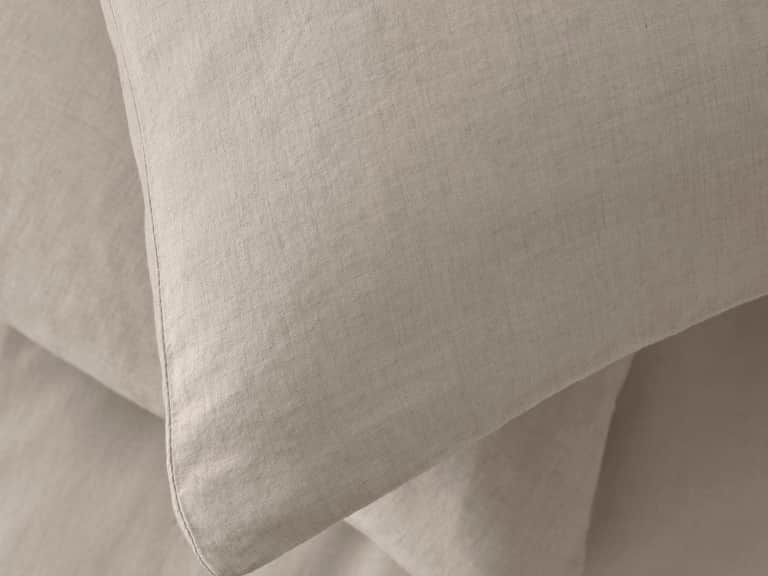
As a concrete example, the Smir Pillow Cases Set is described as 85% cotton and 15% cashmere. Its cotton-cashmere composition is paired with a diagonal twill weave, and the set includes two pillowcases. The product information lists it as machine washable, a practical detail for buyers who want a blended fabric without a dry-clean-only routine. These specifications offer a useful illustration of how blend, construction, and care should be considered together rather than in isolation.
Descriptions such as “cashmere-soft” require particular attention. They may refer to a sensation rather than a fiber content. If cashmere is important to your decision, look for a clear composition label that names the fibers and gives their percentages. A fabric that feels soft is not necessarily made with cashmere, and the word “cashmere” in a product name should not replace a precise material breakdown.
Fiber origin and processing can also be relevant, especially for shoppers comparing sourcing claims. Look for information that distinguishes where a fiber was obtained from where yarn or fabric was made. A country of manufacture does not, on its own, identify the origin of every component. When provenance matters to you, clear, specific documentation is more useful than a broad claim about place or tradition.
Why weave changes the experience
Weave describes how yarns cross to form a fabric, and it can influence texture, drape, durability, and the way a surface catches light. In a diagonal twill weave, the crossing pattern creates characteristic diagonal lines. They may be subtle rather than prominent, lending the fabric a quiet texture and a little visual depth. That structure can give a pillowcase a more tailored appearance than a plain, smooth surface.
For winter bedding, weave is worth considering alongside fiber because it contributes to the overall hand. A cotton-cashmere blend in twill may feel different from the same blend made in another construction. The tactile result depends on the yarns and finishing as well as the pattern of interlacing, so a weave name alone cannot promise a particular degree of softness or warmth.
Think of construction as part of a fabric’s character, not a shortcut to a verdict. A diagonal texture may appeal if you like subtle surface definition and a polished look. If you prefer an exceptionally smooth feel, seek a product description or sample that confirms the finish meets your preference. Where possible, handle fabric in person or review a reliable swatch; written descriptions can explain composition and construction, but they cannot fully reproduce how a textile feels against the skin.
Weight is another useful specification when it is provided. It can help compare fabrics within a similar category, although it should not be treated as a stand-alone measure of warmth or quality. A lightweight fabric can still feel comfortable, while a heavier one may not suit a warm sleeper. Interpret weight together with fiber content, weave, and the intended use of the bedding.
Match warmth to your sleep habits
“Winter” describes the season, not one universal sleep temperature. A cool bedroom, a drafty home, or a preference for layered bedding may make a warmer pillowcase appealing. But someone who overheats at night may value breathable cotton and a lighter construction even in January. Your bedding should respond to your body and room, rather than to the calendar alone.
Consider the whole bed as a system. A pillowcase is only one layer, and the comforter, sheets, mattress protector, sleepwear, and room temperature all affect how warm you feel. If you already sleep under substantial insulation, a softly textured cotton blend may be enough. If your bedding is light and your room runs cold, a fabric with a warmer hand can add a small measure of comfort without requiring a heavier duvet.
Skin sensitivity is also individual. Softness is not a medical guarantee, and fiber names alone cannot predict how every person will respond to a textile. If you are sensitive to texture, seams, dyes, or laundering residues, prioritize a smooth finish, follow washing instructions before first use, and avoid relying on broad claims such as “gentle” without checking the actual construction and care guidance.
- If you sleep warm: prioritize a breathable feel and consider whether a lighter fabric suits your routine.
- If you sleep cool: a soft blend with a gently insulating hand may complement other winter layers.
- If you change bedding frequently: make laundering convenience a central part of the comparison.
- If texture matters most: look closely at weave and finish, and handle the fabric if you can.
Care instructions are part of the purchase
A beautiful pillowcase is only practical if its care routine fits your household. Washing frequency, available laundry facilities, and tolerance for delicate handling all matter. A machine-washable label may be reassuring for bedding used every night, while a fabric requiring more specialized care may still be worthwhile if you are prepared to follow those instructions consistently.
Never infer washability from fiber content alone. Blended fabrics can have different care needs depending on yarn, weave, finishing, and construction. Check the care label for the actual item, not only a general guide to cotton or cashmere. If instructions call for a particular cycle, temperature, detergent, or drying method, follow them: unsuitable heat or agitation can affect a textile’s surface, shape, and longevity.
For machine-washable pillowcases, separate them from items with rough fasteners or abrasive surfaces that could catch the weave. Use the care label’s recommended cycle and temperature, and avoid overloading the machine so the fabric can move freely. Prompt removal after washing may help reduce creasing. Drying instructions vary, so do not assume that a machine-washable fabric is also suitable for high-heat tumble drying.
If a product calls for delicate or professional care, factor the time and expense into your decision. The appeal of a special fiber blend may be diminished if its maintenance does not fit your everyday habits. Conversely, an extra-care item can make sense when it is reserved for particular seasons or when the feel and appearance are priorities you are willing to maintain.
Freshness between washes can be supported by airing bedding and allowing it to dry fully before making the bed. Keep clean pillowcases stored in a dry place, and follow the manufacturer’s advice for stain treatment rather than experimenting with strong products on delicate fibers. Thoughtful care is not merely a preservation ritual; it is part of choosing a textile you can enjoy over the long term.
Compare products with a simple checklist
Product descriptions can be rich in mood and sparse in practical detail. To compare winter pillowcases clearly, record the same information for each option. This makes it easier to distinguish a meaningful difference from persuasive language.
- Exact fiber composition: note every fiber and its percentage. Check that claims in the title match the stated material details.
- Weave and finish: look for a named construction, such as diagonal twill, and any description of the surface or finishing.
- Weight, if available: treat it as one comparison point, not a complete measure of warmth or quality.
- Care instructions: confirm whether the pillowcase is machine washable and note any temperature, cycle, or drying limits.
- Set contents: check how many pillowcases are included and whether the listing is for cases only or a larger bedding set.
- Size and fit: compare the dimensions with your pillow and consider whether the closure and cut suit your needs.
- Origin and certification claims: distinguish fiber origin, textile manufacture, and any specific certification, and look for precise explanations.
- Your own priorities: decide whether softness, breathability, warmth, easy care, or visual texture matters most.
When product information omits a detail that matters to you, seek clarification before buying. An unanswered question about composition, dimensions, or care can be more consequential than a persuasive description of how luxurious a fabric feels. A clear specification is a better basis for comparison than an unqualified adjective.
A balanced case for cotton-cashmere bedding
Cotton-cashmere bedding occupies an appealing middle ground: the familiar character of cotton with a contribution from a fine, soft animal fiber. For winter pillowcases, that pairing can offer a warmer, more tactile alternative to a purely crisp surface while remaining lighter than many thick seasonal fabrics. The exact effect depends on the blend and construction, which is why the label and weave matter.
For shoppers who want practical upkeep, a machine-washable cotton-cashmere pillowcase can be especially compelling. The care information should still be read carefully, since “machine washable” does not mean that all cycles and drying methods are appropriate. Follow the product-specific directions, and remember that repeated washing affects every textile over time. Gentle, suitable care can help maintain a fabric’s feel and appearance.
For others, cashmere may be less important than ease of care or a consistently cool surface. A cotton-only case may better match those preferences. There is no universal hierarchy in which one fiber blend is automatically superior. The best choice is the one whose feel, warmth, construction, and maintenance align with your actual sleep habits.
How to make the final decision
Begin by identifying the problem you want the new pillowcase to solve. If your current bedding feels too cool and flat in winter, consider a softer blend and a more textured weave. If you wake warm or dislike complicated laundry, prioritize breathability and straightforward care. If the main goal is a more refined bed, a diagonal twill can introduce subtle pattern without a bold print.
Next, check the facts in order: composition, construction, care, size, and what is included. Then assess the subjective qualities—softness, drape, and warmth—using a sample or in-person inspection when available. Finally, consider whether the item will fit into your regular routine. A pillowcase that feels lovely but is inconvenient to maintain may spend more time in the linen cupboard than on the bed.
Winter bedding is at its most inviting when comfort and practicality meet. Cotton and cashmere can make a thoughtful pairing; diagonal twill can add texture and quiet polish; and the right care instructions can make a special fabric easier to enjoy. Compare the whole textile, rather than a single fiber or marketing phrase, and choose the case that suits both the sleeper you are and the life you lead.
Quick takeaways
- Fiber percentages clarify what a pillowcase is made from; do not rely on a product name alone.
- Weave affects texture and appearance, but the fabric’s feel also depends on yarns and finishing.
- Warmth, softness, and breathability are related but distinct qualities.
- Care instructions should influence your choice, especially for bedding used every night.
- Compare construction, composition, care, fit, and set contents before deciding.